
There is a need to incentivise R&D investments, offer corporate tax concessions and establish an effective intellectual property rights regime in order to push the growth of domestic pharmaceutical industry, as per the industry bodies. Outlining the sector's wish list for the upcoming Union Budget, Organisation of Pharmaceutical Producers of India (OPPI) Director General Anil Matai urged the government to explore methods to incentivise R&D investments, such as deductions on R&D expenses, research-linked incentives for MNCs, and corporate tax concessions.

With the new government taking charge in Britain, senior officials of India and the UK will hold the next round of talks this month for the proposed free trade agreement to resolve the pending issues and close the negotiations, an official said. The India-UK talks for the proposed free trade agreement (FTA) began in January 2022. The 14th round of talks stalled as the two nations stepped into their general election cycles.

What has surprised the industry is that the Bill has been tabled without any consultation. Critics warn the ban on real-money gaming could fuel black markets, endanger 200,000 jobs and billions in tax revenue.

JSW Paints, part of $23 billion JSW Group, on Friday said it will acquire majority controlling stake in Akzo Nobel India Ltd (ANIL), the maker of Dulux paints, for Rs 8,986 crore. It will acquire 74.76 per cent stake from its Dutch promoters/holding entities -- namely Imperial Chemical Industries and Akzo Nobel Coatings International BV -- for a consideration of Rs 8,986 crore, according to a statement from the JSW Group firm.

'We don't make films for profit and that's exactly why profit follows.'

Astrologer Chirag Daruwalla, who is following in the footsteps of his famed astrologer father, the late Bejan Daruwalla, helps you navigate the Naya Saal.

JV to export e-carts, aim for 10% global market share, $1 bn turnover and innovation in driverless tech.
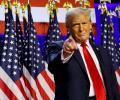
American President Donald Trump has announced imposing reciprocal tariffs on its major trading partners including China that levy higher import duties on goods shipped from the United States. He has already announced a 25 per cent duty on steel and aluminium imports, which will come into effect from March 12.
India finalised a free trade agreement with the UK, its 16th so far as the country aimed at boosting bilateral trade and investments. The other regions and countries with which India has signed such agreements include the four-nation European bloc EFTA, Japan, Korea and Australia.

'The satisfaction of making content only comes when it reaches theatres as you are directly connecting to the masses.'

'The final arrangement within our family was documented in our amended family agreement dated March 31, 2017. We confirm that both of you have no right of any form in the other brother's business of assets.'

All that you must know about the pros and cons of gift deeds, tax implications, essentials, documents required, conditions, etc...
'We have been following the micro-change philosophy, where every six weeks we implement these AI features into our internal systems, products, platforms and then release it to our employees.'

Communications between the USTR and the world's most powerful pharmaceutical and trade lobbying groups reveal that many raised concerns about India's push to exempt Covid vaccines from intellectual property.
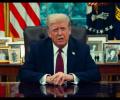
'What the US appears to be doing is to force India to be "the buyer of last resort", on whom their products can be dumped, 1.4 billion people have to eat something, so why not eat American corn?' 'What is exercising the Trump lot is the fact that most of the farms are in solidly Republican Midwestern states: Illinois, Indiana, Kansas, Michigan, Minnesota, Missouri, Nebraska, North Dakota, Ohio, South Dakota, Wisconsin,' points out Rajeev Srinivasan.

The Global Institute of Intellectual Property (GIIP) opens admissions for its post graduate courses.
European Union (EU) companies operating in India want New Delhi to streamline or remove non-tariff barriers such as Quality Control Orders (QCOs), complex Customs procedures; simplify labelling, testing, and import procedures; and facilitate cross-border digital transactions without data localisation constraints. These are results of a Business Sentiment Survey, 2025 conducted by the Federation of European Business in India (FEBI) ahead of resumption of negotiations for a free trade agreement (FTA) between both the sides scheduled to be concluded by year-end.

'We realised that partnering with a strong local player like the JSW Group would create far greater value than going it alone.'
Leading FMCG maker HUL said that it has received a demand notice of Rs 962.75 crore from the Income Tax Department and will go in for an appeal against the order. The notice relates to non-deduction of TDS on payment of Rs 3,045 crore to GlaxoSmithKline Consumer Healthcare (GSKCH) for the acquisition of Intellectual Property Rights of the Health Foods Drinks (HFD) business consisting of brands as Horlicks, Boost, Maltova, and Viva, according to a recent exchange filing.

The varieties will take at least 4 to 5 years to reach farmers after they complete the usual cycle of breeder, foundation and certified seeds.

The top Obama Administration official said the US will negotiate agreements that commit its trading partners to protecting American intellectual property, such as the Anti-Counterfeiting Trade Agreement and the Trans-Pacific Partnership.

Dining today isn't just about food -- it's about the experience and the story.

The Indian Army on Thursday said it has registered the intellectual property rights of its new design and camouflage pattern uniform.

Numeros Motors is also planning to come up with a passenger vehicle four-wheeler or a three-wheeler by 2027.

'IndiGo's position in this argument will depend on whether it has registered '6e' as a trademark.'

Global cryptocurrency giant Binance has asserted that it never owned or controlled WazirX before or after the embattled Indian exchange was hacked in July that led to a security breach of more than $230 million. Binance added that there was no legal basis for the firm to be liable for claims made against the embattled crypto exchange. It refuted WazirX's claims that the global exchange owns the company, adding that it does not operate the platform.

'Son believes India has a significant opportunity in chip design, especially in creating IP that will be uniquely Indian.'

'Make-in-India played a key role in India's effective action against terrorism during Operation Sindoor.'
The World Intellectual Property Organistion (Wipo)'s Worldwide Academy on Saturday urged the Indian industries to invest heavily in human resource development in the field of intellectual property.

'We don't have to compete with Maharashtra or Gujarat. We have to now start thinking about how we compete with the United States or China.'

The cricketer said a sale agreement was executed between him and his mother on one side and the builder on the other for the purchase of an apartment for over Rs 14 crore in the real estate project initiated by Brilliant Etoile Pvt Ltd in Hauz Khas under the name 'Sky Mansion' and displaying the name 'Risland'.
'The law under the guise of security represents a grave and unnecessary expansion of State power at the cost of fundamental rights,' asserts Aakar Patel.

A senior official attached with the Tambaram police commissionerate has been transferred and put under compulsory wait, days after the AR Rahman concert row that among others witnessed traffic snarls which even affected the movement of the Chief Minister's convoy.

The Indian Navy, which was earlier looking towards the US for design expertise, technical know-how and operational practices, is now considering the advantages of working with the Royal Navy.
'As negotiations continue, the path forward demands not only diplomatic skill, but also vigilance against legal asymmetries embedded in America's trade playbook.'
The challenge for India will be to ensure the law does not get out of step with the demands of a country that needs foreign investment and new technologies.

Data contradict Swiss drug major's claim that India does not respect IPR.

On Monday, the Appellate Board upheld the compulsory licence granted to domestic firm Natco Pharma last year, against Bayer's patented anti-cancer drug Nexavar.
Twelve countries - India, Pakistan, China, Russia, Algeria, Argentina, Canada, Chile, Indonesia, Israel, Thailand and Venezuela - are on the Priority Watch List.
